














Date of planning : …/… / 2021 ENGLISH 6
Date of teaching : .....
Period 1 : INTRODUCTION WEEK : 1
INSTRUCTIONS FOR USING TEXTBOOKS, STUDYING MATERIALS I. OBJECTIVES: 1. Knowledge:
- To introduce new Tieng Anh 6 textbooks. Student’s book and Workbook
- Tell students something about Great Britain; England and English. Students learn how to study
English well and know the way to learn English.
*Vocabulary: Use lexical items related to text book, and the way to learn English in class; at
home... some classroom languages.
* Grammar : to be; present simple tense; present continuous… 2. Competence:
- By the end of the lesson, students will be able to know how to study English effectively and how to
use new Tieng Anh 6 textbooks and know the methods to study new Tieng Anh 6 textbooks.
3.Quality/Behavior: To teach Ss the love of English; the love of their new school. The awareness
about importance of learning English. Ss have the good attitude to working in groups, individual
work, pairwork, cooperative learning and working. II. TEACHING AIDS:
- Teacher: Text book, laptop, louspeaker, projector…
- Students : Text books, studying equipments….
- Method;: T-WC; group works; individual …… III. PROCEDURE:
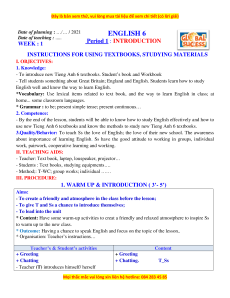
1. WARM UP & INTRODUCTION ( 3’- 5’) Aims:
- To create a friendly and atmosphere in the class before the lesson;
- To give T and Ss a chance to introduce themselves; - To lead into the unit
* Content: Have some warm-up activities to creat a friendly and relaxed atmostphere to inspire Ss to warm up to the new class.
* Outcome: Having a chance to speak English and focus on the topic of the lesson..
* Organisation: Teacher’s instructions…
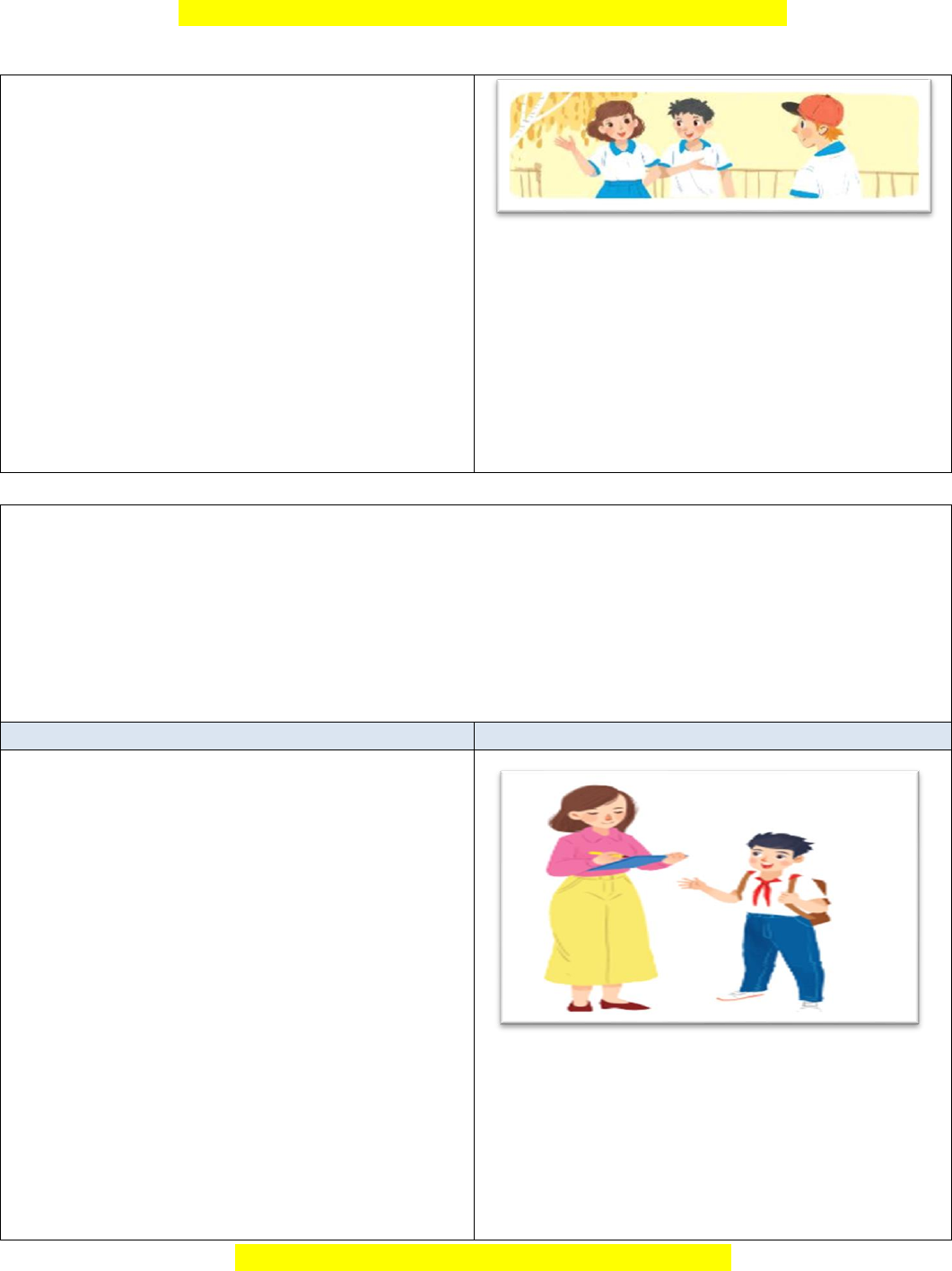
Teacher’s & Student’s activities Content + Greeting + Greeting + Chatting + Chatting. T_Ss
- Teacher (T) introduces himself/ herself
- T may introduce some warm-up activities to
creat a friendly and relaxed atmostphere to
inspire Ss to warm up to the new class…
- Have Ss to introduce themselves.
- T encourages Ss to talk in English as much as possible
- Students (Ss) listen and learn how to introduce
+ Lead to the first unit of the new school year. themselves.
- Write the unit title on the board and ask Ss
- Introduce themselves (name; age;address;
guest what they are going to learn this unit …
likes; dislikes ….friends… )
- Ask Ss to open their book and introduce what
+ Students (Ss) listen and learn how to do the they are going to study…. tasks.
- Answer the teacher’s questions
- Open their book and write .
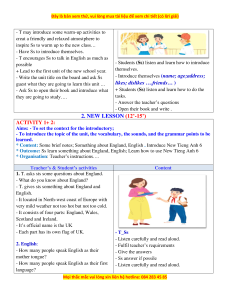
2. NEW LESSON (12’-15’) ACTIVITY 1+ 2:
Aims: - To set the context for the introductory;
- To introduce the topic of the unit, the vocabulary, the sounds, and the grammar points to be learned.
* Content: Some brief notes; Something about England, English . Introduce New Tieng Anh 6
* Outcome: Ss learn something about England, English; Learn how to use New Tieng Anh 6
* Organisation: Teacher’s instructions….
Teacher’s & Student’s activities Content
1. T. asks sts some questions about England.
- What do you know about England?
- T. gives sts something about England and English.
- It located in North-west coast of Europe with
very mild weather not too hot but not too cold.
- It consists of four parts: England, Wales, Scotland and Ireland.
- It’s official name is the UK
- Each part has its own flag of UK. - T_Ss
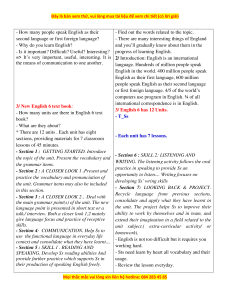
- Listen carefully and read aloud. 2. English:
- Fulfil teacher’s requirements
- How many people speak English as their - Give the answers mother tongue? - Ss answer if possile
- How many people speak English as their first
- Listen carefully and read aloud. language?
- How many people speak English as their
- Find out the words related to the topic.
second language or first foreign language?
- There are many interesting things of England - Why do you learn English?
and you’ll gradually know about them in the
- Is it important? Difficult? Useful? Interesting? progress of learning English.
=> It’s very important, useful, interesting. It is 2/ Introduction: English is an international
the means of communication to one another.
language. Hundreds of million people speak
English in the world. 400 million people speak
English as their first language, 600 million
people speak English as their second language
or first foreign language. 4/5 of the world’s
computers use program in English. ¾ of all
international correspondence is in English.
3/ New English 6 text book:
3/ English 6 has 12 Units.
- How many units are there in English 6 text - T_Ss book? - What are they about?
* There are 12 units . Each unit has eight
- Each unit has 7 lessons.
sections, providing materials for 7 classroom lessons of 45 minutes.
- Section 1 : GETTING STARTED. Introduce
- Section 6 : SKILL 2: LISTENING AND
the topic of the unit. Present the vocabulary and WRITING. The listening activity follows the oral the grammar items.
practice in speaking to provide Ss an
- Section 2 : A CLOSER LOOK 1 .Present and
opportunity to listen.... Writing focuses on
practice the vocabulary and pronunciation of
developing Ss’ wring skills
the unit. Grammar items may also be included
- Section 7: LOOKING BACK & PROJECT. in this section.
Recycle language from previous sections,
- Section 3 : A CLOSER LOOK 2 . Deal with
the main grammar point(s) of the unit. The new
consolidate and apply what they have learnt in
language point is presented in short text or a
the unit. The project helps Ss to improve their
talk./ interview. Both a closer look 1,2 mainly
ability to work by themselves and in team, and
give language focus and practice of receptive
extend their imagination in a field related to the skills.
unit subject.( extra-curricular activity/ or
- Section 4: COMMUNICATION. Help Ss to homework).
use the functional language in everyday life
- English is not too difficult but it requires you
context and consolidate what they have learnt....
- Section 5 : SKILL 1 . READING AND working hard.
SPEAKING. Develop Ss reading abilities And
- Sts need learn by heart all vocabulary and their
provide further practice which supports Ss in usage.
their production of speaking English freely. - Review the lesson everyday.
- Learn English everyday. 3. PRACTICE (15’) ACTIVITY 3:
Aims: To help Ss understand the lesson. Class room language
* Content: Some brief notes; Something about England, English . Classroom language…
* Outcome: Ss learn something about England, English; Classroom languages…
* Organisation: Teacher’s instructions….
Teacher’s & Student’s activities Content
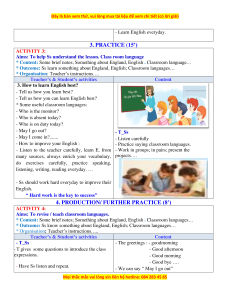
3. How to learn English best?
- Tell us how you learn best?
- Tell us how you can learn English best?
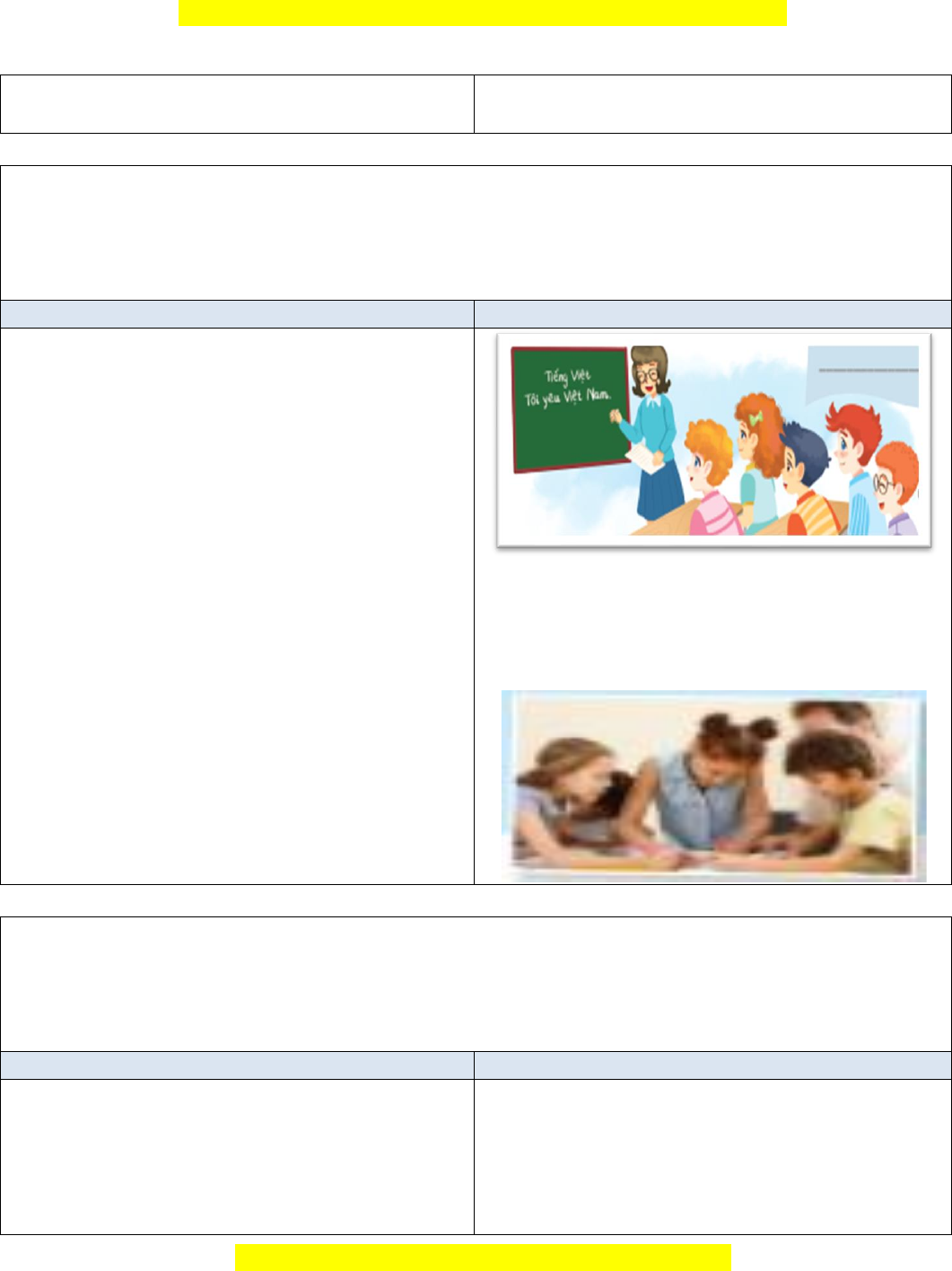
* Some useful classroom languages: - Who is the monitor? - Who is absent today? - Who is on duty today? - May I go out? - T_Ss - May I come in?....... - Listen carefully
- How to improve your English :
- Practice saying classroom languages.
- Listen to the teacher carefully, learn E. from - Work in groups; in pairs; present the
many sources, always enrich your vocabulary, projects….
do exercises carefully, practice speaking,
listening, writing, reading everyday. …
- Ss should work hard everyday to improve their English.
“ Hard work is the key to success”
4. PRODUCTION/ FURTHER PRACTICE (8’) ACTIVITY 4:
Aims: To revise / teach classroom languages.
* Content: Some brief notes; Something about England, English . Classroom languages…
* Outcome: Ss know something about England, English; Classroom languages…
* Organisation: Teacher’s instructions…..
Teacher’s & Student’s activities Content - T_Ss
- The greetings : - goodmorning
- T gives some questions to introduce the class - Good afternoon expressions. - Good morning - Good bye …. - Have Ss listen and repeat.
- We can say “ May I go out”
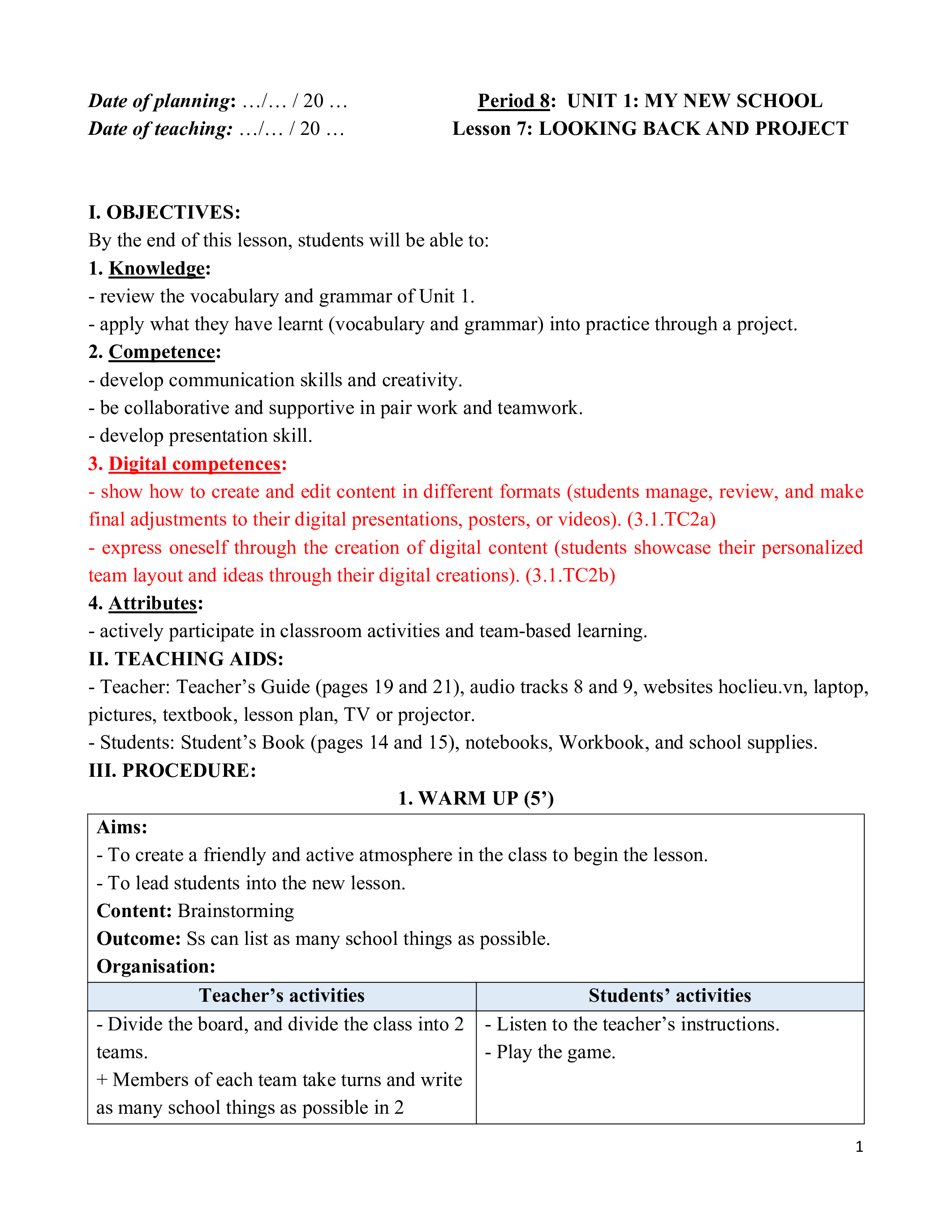
Date of planning: …/… / 20 …
Period 8: UNIT 1: MY NEW SCHOOL
Date of teaching: …/… / 20 …
Lesson 7: LOOKING BACK AND PROJECT I. OBJECTIVES:
By the end of this lesson, students will be able to: 1. Knowledge:
- review the vocabulary and grammar of Unit 1.
- apply what they have learnt (vocabulary and grammar) into practice through a project. 2. Competence:
- develop communication skills and creativity.
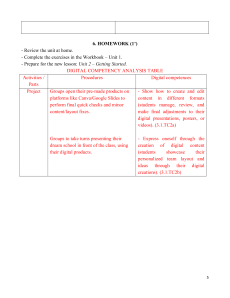
- be collaborative and supportive in pair work and teamwork. - develop presentation skill. 3. Digital competences:
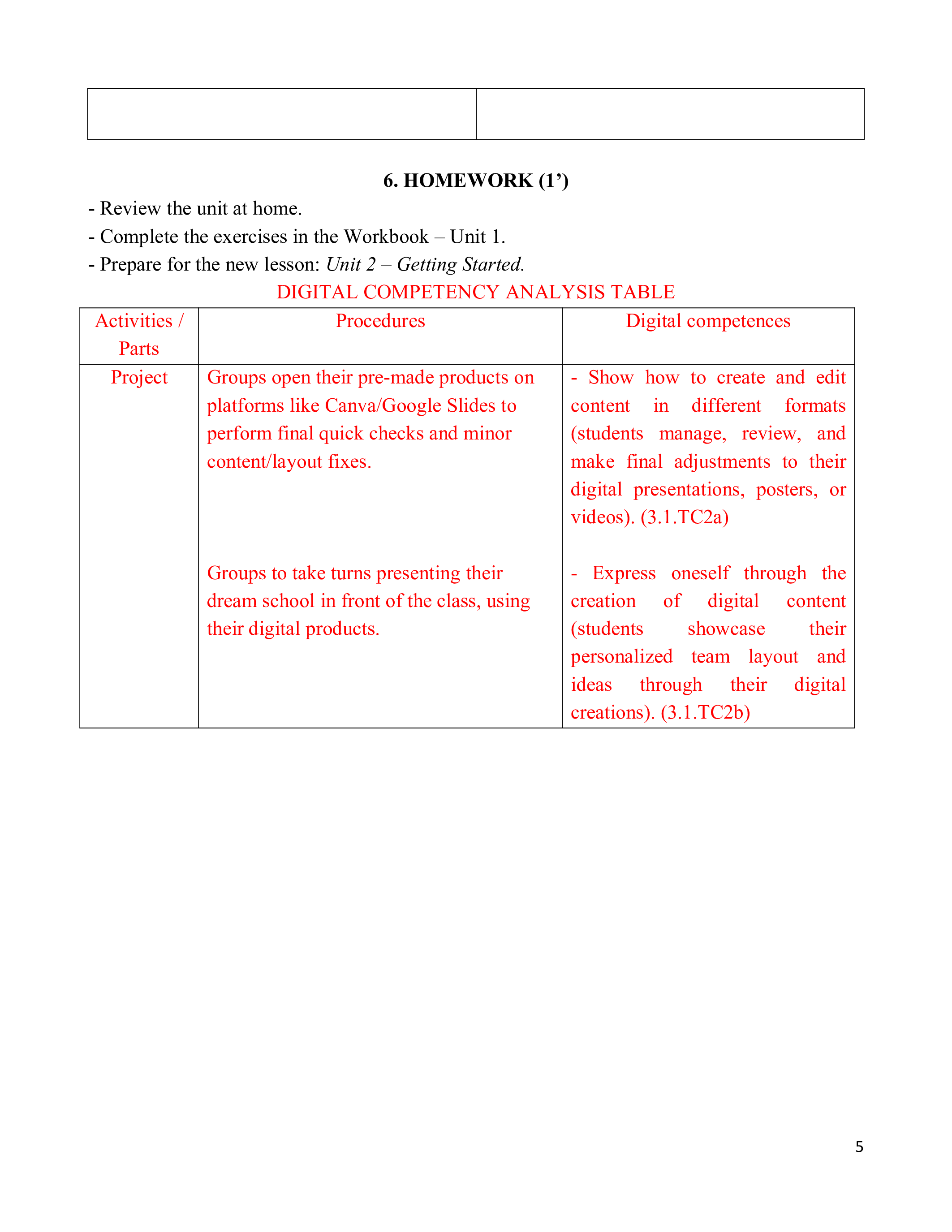
- show how to create and edit content in different formats (students manage, review, and make
final adjustments to their digital presentations, posters, or videos). (3.1.TC2a)
- express oneself through the creation of digital content (students showcase their personalized
team layout and ideas through their digital creations). (3.1.TC2b) 4. Attributes:
- actively participate in classroom activities and team-based learning. II. TEACHING AIDS:
- Teacher: Teacher’s Guide (pages 19 and 21), audio tracks 8 and 9, websites hoclieu.vn, laptop,
pictures, textbook, lesson plan, TV or projector.
- Students: Student’s Book (pages 14 and 15), notebooks, Workbook, and school supplies. III. PROCEDURE: 1. WARM UP (5’) Aims:
- To create a friendly and active atmosphere in the class to begin the lesson.
- To lead students into the new lesson. Content: Brainstorming
Outcome: Ss can list as many school things as possible. Organisation: Teacher’s activities Students’ activities
- Divide the board, and divide the class into 2 - Listen to the teacher’s instructions. teams. - Play the game.
+ Members of each team take turns and write
as many school things as possible in 2 1 minutes.
+ The group having more correct answers is the winner.
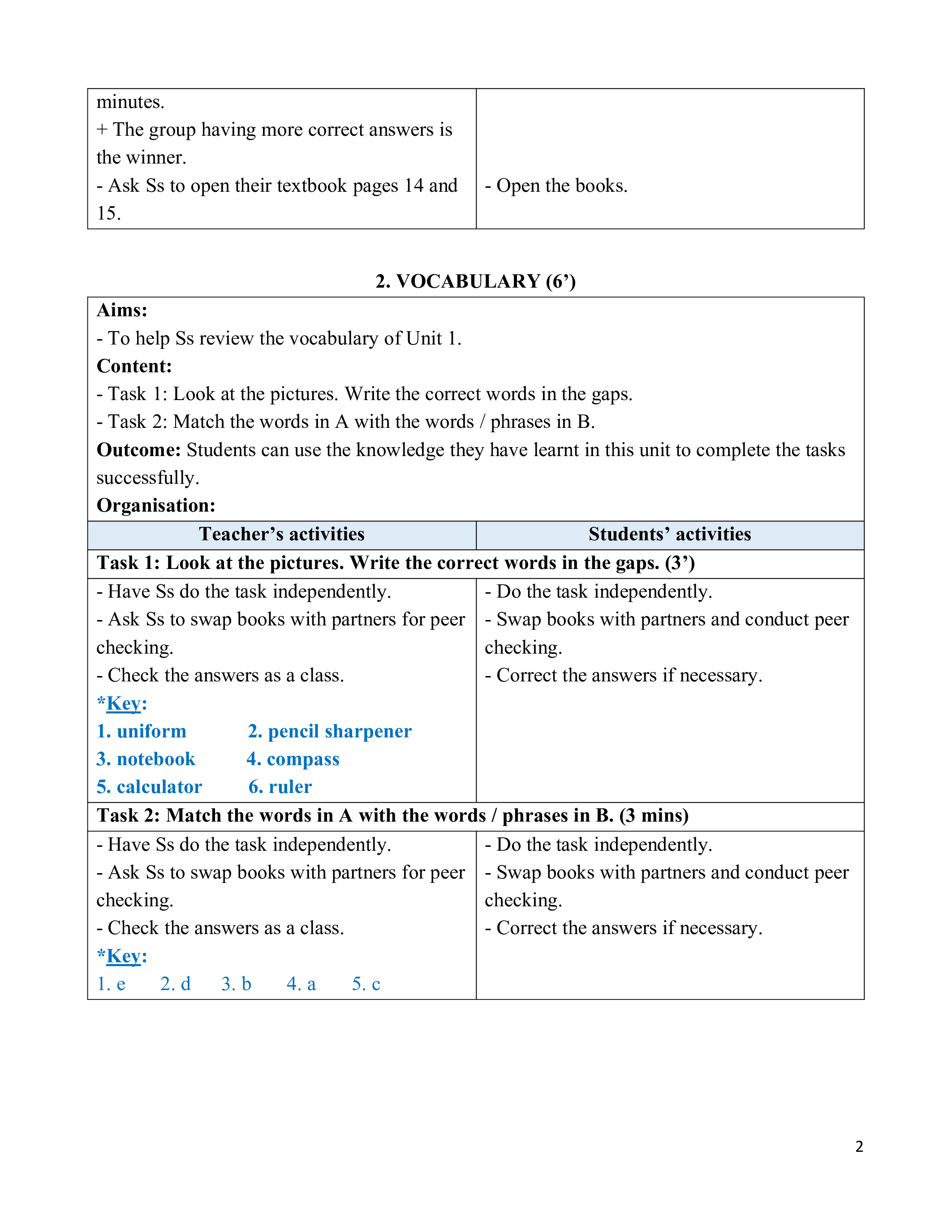
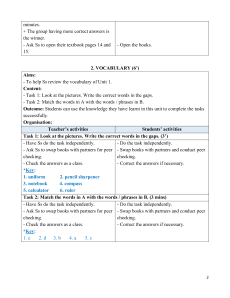
- Ask Ss to open their textbook pages 14 and - Open the books. 15. 2. VOCABULARY (6’) Aims:
- To help Ss review the vocabulary of Unit 1. Content:
- Task 1: Look at the pictures. Write the correct words in the gaps.
- Task 2: Match the words in A with the words / phrases in B.
Outcome: Students can use the knowledge they have learnt in this unit to complete the tasks successfully. Organisation: Teacher’s activities Students’ activities
Task 1: Look at the pictures. Write the correct words in the gaps. (3’)
- Have Ss do the task independently. - Do the task independently.
- Ask Ss to swap books with partners for peer - Swap books with partners and conduct peer checking. checking.
- Check the answers as a class.
- Correct the answers if necessary. *Key: 1. uniform 2. pencil sharpener 3. notebook 4. compass 5. calculator 6. ruler
Task 2: Match the words in A with the words / phrases in B. (3 mins)
- Have Ss do the task independently. - Do the task independently.
- Ask Ss to swap books with partners for peer - Swap books with partners and conduct peer checking. checking.
- Check the answers as a class.
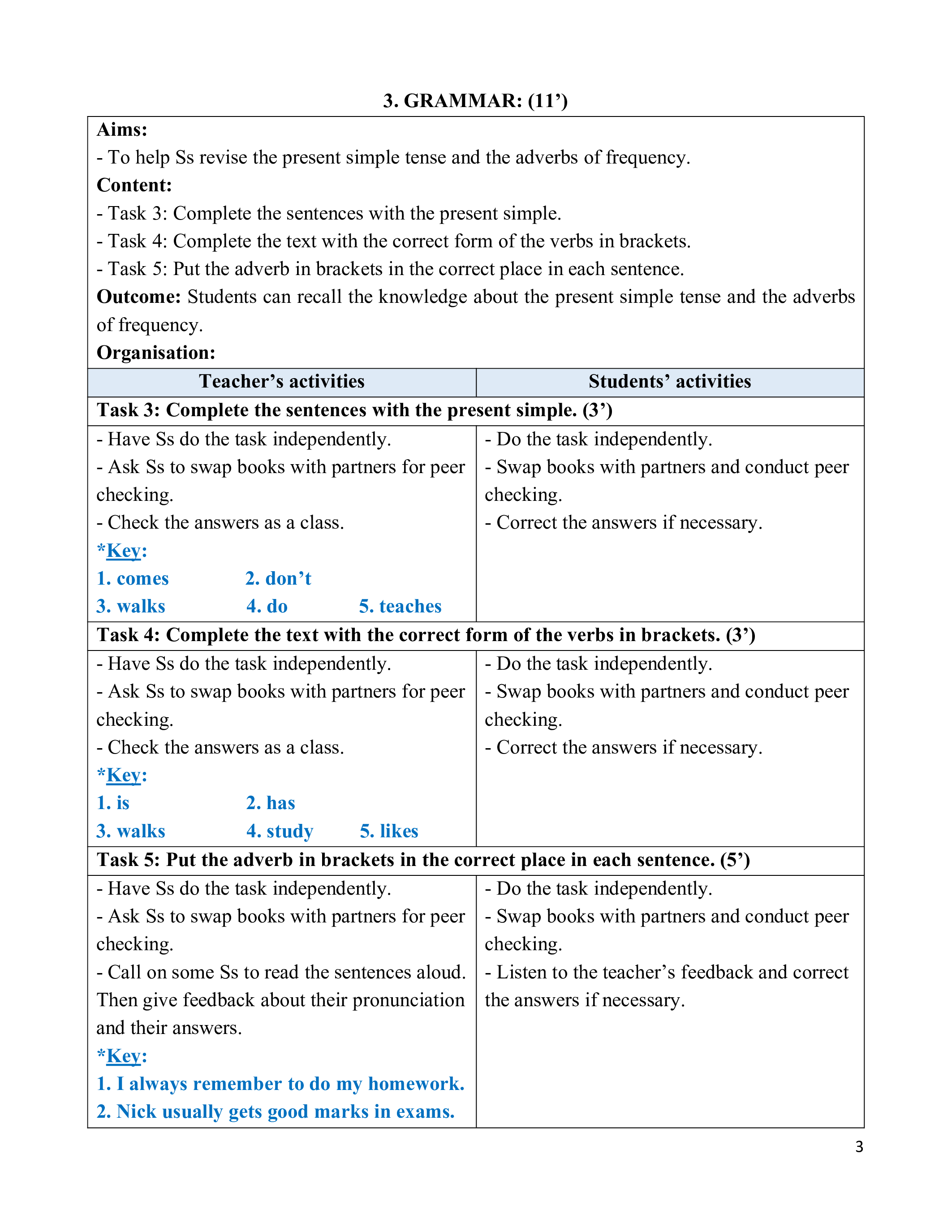
- Correct the answers if necessary. *Key: 1. e 2. d 3. b 4. a 5. c 2 3. GRAMMAR: (11’) Aims:
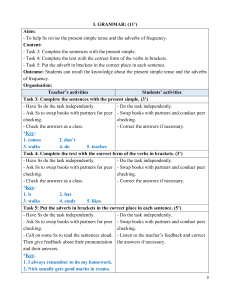
- To help Ss revise the present simple tense and the adverbs of frequency. Content:
- Task 3: Complete the sentences with the present simple.
- Task 4: Complete the text with the correct form of the verbs in brackets.
- Task 5: Put the adverb in brackets in the correct place in each sentence.
Outcome: Students can recall the knowledge about the present simple tense and the adverbs of frequency. Organisation: Teacher’s activities Students’ activities
Task 3: Complete the sentences with the present simple. (3’)
- Have Ss do the task independently. - Do the task independently.
- Ask Ss to swap books with partners for peer - Swap books with partners and conduct peer checking. checking.
- Check the answers as a class.
- Correct the answers if necessary. *Key: 1. comes 2. don’t 3. walks 4. do 5. teaches
Task 4: Complete the text with the correct form of the verbs in brackets. (3’)
- Have Ss do the task independently. - Do the task independently.
- Ask Ss to swap books with partners for peer - Swap books with partners and conduct peer checking. checking.
- Check the answers as a class.
- Correct the answers if necessary. *Key: 1. is 2. has 3. walks 4. study 5. likes
Task 5: Put the adverb in brackets in the correct place in each sentence. (5’)
- Have Ss do the task independently. - Do the task independently.
- Ask Ss to swap books with partners for peer - Swap books with partners and conduct peer checking. checking.
- Call on some Ss to read the sentences aloud. - Listen to the teacher’s feedback and correct
Then give feedback about their pronunciation the answers if necessary. and their answers. *Key:
1. I always remember to do my homework.
2. Nick usually gets good marks in exams. 3
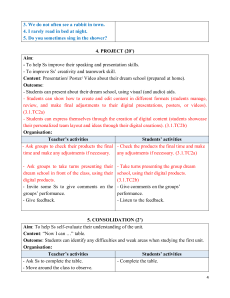
3. We do not often see a rabbit in town.
4. I rarely read in bed at night.
5. Do you sometimes sing in the shower? 4. PROJECT (20’) Aim:
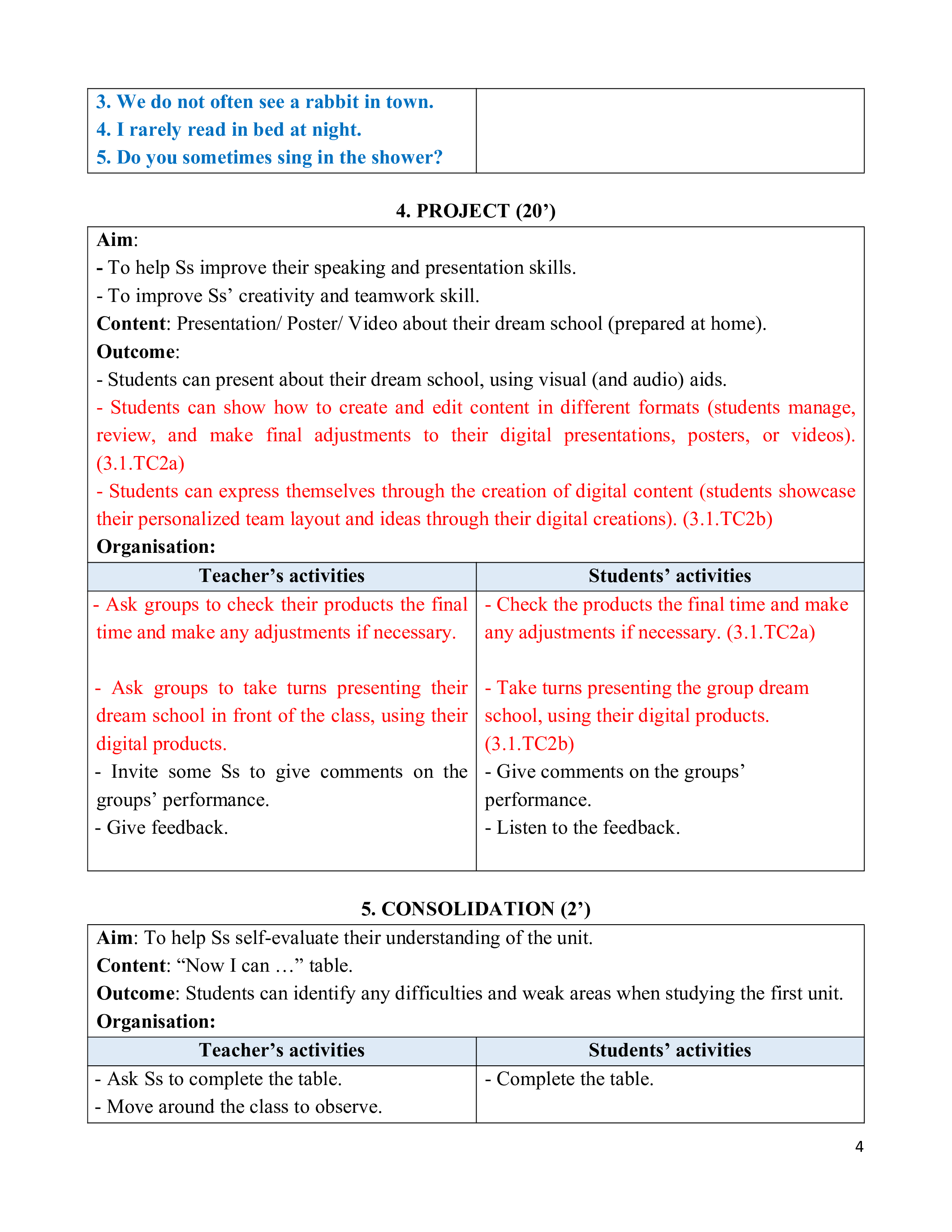
- To help Ss improve their speaking and presentation skills.
- To improve Ss’ creativity and teamwork skill.
Content: Presentation/ Poster/ Video about their dream school (prepared at home). Outcome:
- Students can present about their dream school, using visual (and audio) aids.
- Students can show how to create and edit content in different formats (students manage,
review, and make final adjustments to their digital presentations, posters, or videos). (3.1.TC2a)
- Students can express themselves through the creation of digital content (students showcase
their personalized team layout and ideas through their digital creations). (3.1.TC2b) Organisation: Teacher’s activities Students’ activities
- Ask groups to check their products the final - Check the products the final time and make
time and make any adjustments if necessary.
any adjustments if necessary. (3.1.TC2a)
- Ask groups to take turns presenting their - Take turns presenting the group dream
dream school in front of the class, using their school, using their digital products. digital products. (3.1.TC2b)
- Invite some Ss to give comments on the - Give comments on the groups’ groups’ performance. performance. - Give feedback. - Listen to the feedback. - 5. CONSOLIDATION (2’)
Aim: To help Ss self-evaluate their understanding of the unit.
Content: “Now I can …” table.
Outcome: Students can identify any difficulties and weak areas when studying the first unit. Organisation: Teacher’s activities Students’ activities
- Ask Ss to complete the table. - Complete the table.
- Move around the class to observe. 4

 Nhắn tin Zalo